Forthward

Elevate your design influence, lead the future › forward

An exploratory design lab for emergent approaches to future-leading design practices. Built for designers who believe influence is a craft, and that the best design work happens when you lead the room, not just fill it. Forthward was a space to go deep on the skills, mindsets, and frameworks that don't show up in most design curricula.
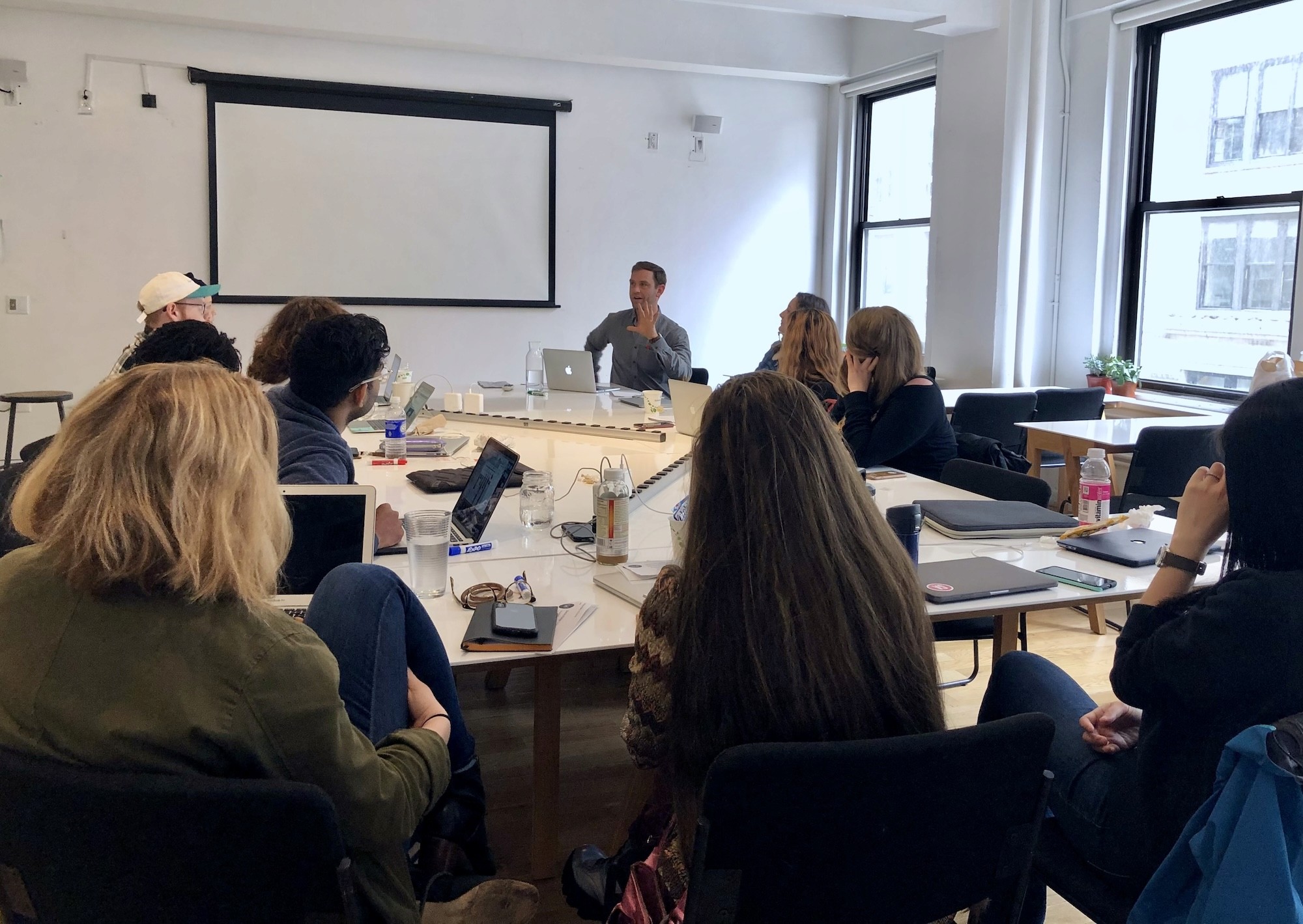
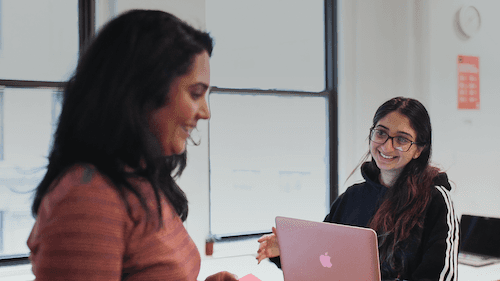
A learner in a design studio, engaged and seated at a laptop during a session.

Program Development

Mentorship

Interface KitDesign & Build
Practical DemonstrationDesign Refinement
Golden Hour
Landscape PhotographyGolden Hour
Working KnowledgeFrameworks & Models
Collaborating with AIPractical Methods

Opportunity

A space for design leadership transformation

A space for design leadership transformation

Forthward started as a belief: that design influence is a learnable skill, and that the most effective designers aren't just craft practitioners. They're systems thinkers, organizational leaders, and creative advocates.

Over nearly a decade, it grew into a curriculum of live, instructor-led sessions and immersive labs, each built around dialogue, hands-on practice, and real implementation. Topics ranged from business and service design to machine learning, circular economies, team structure, and interview confidence. Always adapting as the field evolved.

Product design was maturing fast. Tools got better, processes got standardized, bootcamps proliferated. But something was getting left behind. The field was producing capable practitioners at scale while producing very few designers who knew how to lead, influence, advocate, or operate systemically inside an organization. The gap wasn't craft. It was everything around craft: how to build relationships across functions, how to defend design decisions under pressure, how to think about business models and circular systems and team dynamics as extensions of design thinking itself. Most learning environments weren't touching any of that.

Forthward was built to fill that gap.

Forthward started as a belief: that design influence is a learnable skill, and that the most effective designers aren't just craft practitioners. They're systems thinkers, organizational leaders, and creative advocates.

Over nearly a decade, it grew into a curriculum of live, instructor-led sessions and immersive labs, each built around dialogue, hands-on practice, and real implementation. Topics ranged from business and service design to machine learning, circular economies, team structure, and interview confidence. Always adapting as the field evolved.

Product design was maturing fast. Tools got better, processes got standardized, bootcamps proliferated. But something was getting left behind. The field was producing capable practitioners at scale while producing very few designers who knew how to lead, influence, advocate, or operate systemically inside an organization. The gap wasn't craft. It was everything around craft: how to build relationships across functions, how to defend design decisions under pressure, how to think about business models and circular systems and team dynamics as extensions of design thinking itself. Most learning environments weren't touching any of that.

Forthward was built to fill that gap.

0+

0+

Years running

0

0

Programs offered

0

0

Search content types

0

0

Sessions

0

0

Labs

0+

0+

Years running

0

0

Platforms in a single SwiftUI codebase

0

0

Search content types

0

0

Sessions

0

0

Labs

Problem

A lack of leadership training for associate designers

A lack of leadership training for associate designers

Designers were graduating from programs and bootcamps with strong UI skills and thin professional identities. They could prototype. They could research. But put them in a room with a VP of Engineering or a product manager pushing back on a timeline, and the confidence evaporated. They didn't know how to articulate design's value in business terms. They didn't have frameworks for leading without authority. They hadn't been asked to think about their own values, their own design DNA, or what kind of leaders they actually wanted to become.

The deeper problem was structural. Most continuing education for designers was either tool-focused or portfolio-focused. Nobody was running programs on the inner work of becoming a design leader. Nobody was asking designers to sit with hard questions about influence, systems thinking, organizational dynamics, and personal growth inside a professional context.

Designers were graduating from programs and bootcamps with strong UI skills and thin professional identities. They could prototype. They could research. But put them in a room with a VP of Engineering or a product manager pushing back on a timeline, and the confidence evaporated. They didn't know how to articulate design's value in business terms. They didn't have frameworks for leading without authority. They hadn't been asked to think about their own values, their own design DNA, or what kind of leaders they actually wanted to become.

The deeper problem was structural. Most continuing education for designers was either tool-focused or portfolio-focused. Nobody was running programs on the inner work of becoming a design leader. Nobody was asking designers to sit with hard questions about influence, systems thinking, organizational dynamics, and personal growth inside a professional context.

Solution

A space for design leadership transformation

A space for design leadership transformation

Forthward was designed as a small-seminar learning environment. Not a course. Not a lecture series. A live, facilitated space where a small group of designers could go deep together on a single focused topic in a single session. The seminar and lab format was deliberate: it creates the conditions for exploratory thinking, honest dialogue, and applied practice that a recorded course or asynchronous curriculum simply cannot replicate. People needed to be in the room, challenged in real time, working through scenarios with peers.

The curriculum covered two tracks. Sessions were focused on design transformation and leadership: how to read a business model, how to structure a team ecologically, how to map a service experience, how to operate in circular systems, how to bring computation and AI into a humanist design practice. Labs were more personal and applied: interview preparation, portfolio craft, design challenges, research mindsets. Both tracks shared the same learning arc: Dialogue, then Practice, then Implement. Every attendee left with something they could bring into their work the following week.

The interpersonal dimension was central throughout. Programs on Creative Intelligence asked designers to defend their work under simulated stakeholder pressure, building the kind of real-time confidence that only comes from doing. Designer DNA asked people to articulate their own values and build a personal design manifesto. Ecological Teams modeled what it looks like to organize a product team as a living, adaptive system rather than a hierarchy. These weren't soft topics treated softly. They were rigorous frameworks applied to the messiest, most human parts of design work.

In more recent years, the curriculum evolved with the field. As AI began reshaping product teams, Forthward leaned into Computation Design and full-stack design enablement, asking designers not to fear the technology but to understand it well enough to lead through it. The goal was never to make designers into engineers. It was to make sure designers had the range and the confidence to stay at the table as the table changed shape.

Over nine years, from 2017 to 2026, Forthward ran twelve programs across eight sessions and four labs. It was a small, deliberately intimate offering. That was always the point.

Forthward was designed as a small-seminar learning environment. Not a course. Not a lecture series. A live, facilitated space where a small group of designers could go deep together on a single focused topic in a single session. The seminar and lab format was deliberate: it creates the conditions for exploratory thinking, honest dialogue, and applied practice that a recorded course or asynchronous curriculum simply cannot replicate. People needed to be in the room, challenged in real time, working through scenarios with peers.

The curriculum covered two tracks. Sessions were focused on design transformation and leadership: how to read a business model, how to structure a team ecologically, how to map a service experience, how to operate in circular systems, how to bring computation and AI into a humanist design practice. Labs were more personal and applied: interview preparation, portfolio craft, design challenges, research mindsets. Both tracks shared the same learning arc: Dialogue, then Practice, then Implement. Every attendee left with something they could bring into their work the following week.

The interpersonal dimension was central throughout. Programs on Creative Intelligence asked designers to defend their work under simulated stakeholder pressure, building the kind of real-time confidence that only comes from doing. Designer DNA asked people to articulate their own values and build a personal design manifesto. Ecological Teams modeled what it looks like to organize a product team as a living, adaptive system rather than a hierarchy. These weren't soft topics treated softly. They were rigorous frameworks applied to the messiest, most human parts of design work.

In more recent years, the curriculum evolved with the field. As AI began reshaping product teams, Forthward leaned into Computation Design and full-stack design enablement, asking designers not to fear the technology but to understand it well enough to lead through it. The goal was never to make designers into engineers. It was to make sure designers had the range and the confidence to stay at the table as the table changed shape.

Over nine years, from 2017 to 2026, Forthward ran twelve programs across eight sessions and four labs. It was a small, deliberately intimate offering. That was always the point.

Program DNA

Core Values

Core Values

The beliefs that shaped every session

Infiltrate through influence

Consider influence as a kinesthetic energy current that is systemically powerful.

LEAD WITHOUT AUTHORITY

Build relationships as a natural expression of intrapreneurial energy.

VIEW THE WORLD AS INTERCONNECTED

Apply a systems design frame of mind to all design challenges, big and small.

FORGE CIRCULAR NETWORKS

Cast your connections into new territories to widen and diversify perspectives.

HARNESS A FUTURE FORWARD MINDSET

View the world as ever abundant and constantly evolving forward.

THRIVE IN HUMANNESS

Consider the full human experience and the implications of design onto our speciation.

I'm always open to meaningful conversations

I’m here for it. Whether you have a question, an idea, or just want to connect, reach out and let’s build a conversation.

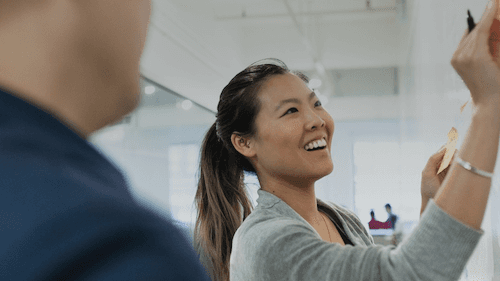
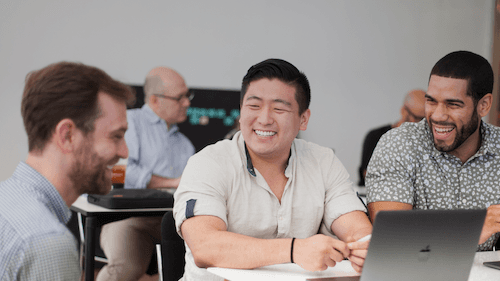
Smiling young women and man in a conversation.
A woman and a man working side-by-side at an open workspace together.
A women at a whiteboard ideating with another person from a team.
Close-up of a dark green leaf showing its textured surface and central vein against a muted background.
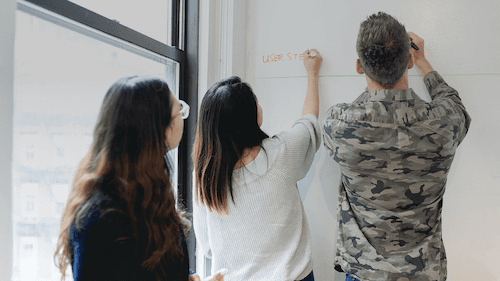
Three designers working on a whiteboard wall.
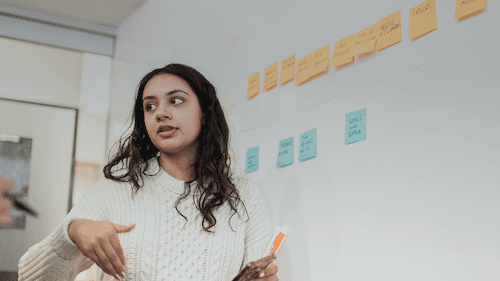
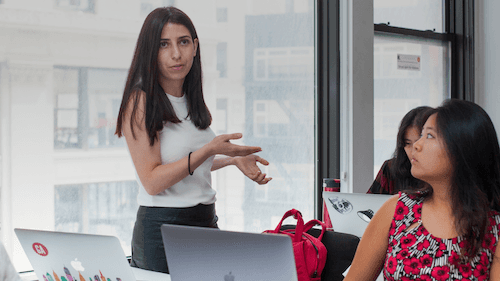
A women making a clear statement in a learning environment.
Two learners and an instructor engaging in a conversation.
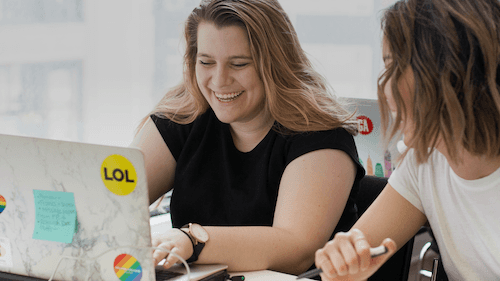
Two women smiling working side-by-side.

I'm always open to meaningful conversations

I’m here for it. Whether you have a question, an idea, or just want to connect, reach out and let’s build a conversation.

Smiling young women and man in a conversation.
A woman and a man working side-by-side at an open workspace together.
A women at a whiteboard ideating with another person from a team.
Close-up of a dark green leaf showing its textured surface and central vein against a muted background.
Three designers working on a whiteboard wall.
A women making a clear statement in a learning environment.
Two learners and an instructor engaging in a conversation.
Two women smiling working side-by-side.

I'm always open to meaningful conversations

I’m here for it. Whether you have a question, an idea, or just want to connect, reach out and let’s build a conversation.

Smiling young women and man in a conversation.
A woman and a man working side-by-side at an open workspace together.
A women at a whiteboard ideating with another person from a team.
Close-up of a dark green leaf showing its textured surface and central vein against a muted background.
Three designers working on a whiteboard wall.
A women making a clear statement in a learning environment.
Two learners and an instructor engaging in a conversation.
Two women smiling working side-by-side.