Practice
My practice lives at the intersection of design, systems, people, and the ecosystems they form.
I've spent sixteen years treating strategy, teaming, curriculum, and craft not as separate disciplines but as a single living system. Each one feeds the others. None of them works without the rest. What I build is designed to compound, outlasting any single project, role, or team I've been part of.
Emergence · Discovery
Reading the living system
Reading the living system
Persistently explore the edges of understanding to reveal the problem's core
I never start with a solution. I start at the edges. Every meaningful problem I've worked on revealed itself through contradiction, not announcement. The real problem is always the one nobody named yet.
I map edges before centers. I trace networks of pressure, assumption, and incentive underneath the presenting issue until the structure becomes legible. This means resisting the pull to frame early and staying in the discomfort of not-yet-knowing long enough for signal to separate from noise.
In practice, this looks like deep stakeholder listening, competitive and adjacent landscape mapping, and a persistent habit of asking what's conspicuously absent from the conversation.
I never start with a solution. I start at the edges. Every meaningful problem I've worked on revealed itself through contradiction, not announcement. The real problem is always the one nobody named yet.
I map edges before centers. I trace networks of pressure, assumption, and incentive underneath the presenting issue until the structure becomes legible. This means resisting the pull to frame early and staying in the discomfort of not-yet-knowing long enough for signal to separate from noise.
In practice, this looks like deep stakeholder listening, competitive and adjacent landscape mapping, and a persistent habit of asking what's conspicuously absent from the conversation.

Mapping Edges
Emergence Approach
This is how I move through every problem…
…starting at the edges, where the real signals live, and working inward until the structure becomes legible. Along the way, I hold these ways of working true.

Sensing before seeing
My first move is never analysis. It's contact. I spend time inside the problem environment before I draw any conclusions about its shape.

Edges reveal cores
The margins are where the system tells the truth. I've found the real problem consistently where things break down, where the workaround became the workflow.

Holding the ambiguity
Premature convergence is the most common failure in discovery. I build team cultures that stay curious longer. That discipline produces far better design.

What's not being said
The most important signal in any discovery phase is the one nobody volunteered. I build the conditions for it to surface. That means asking differently questions.
Emergence Approach
This is how I move through every problem…
…starting at the edges, where the real signals live, and working inward until the structure becomes legible. Along the way, I hold these ways of working true.
Sensing before seeing
My first move is never analysis. It's contact. I spend time inside the problem environment before I draw any conclusions about its shape.
Edges reveal cores
The margins are where the system tells the truth. I've found the real problem consistently where things break down, where the workaround became the workflow.
Holding the ambiguity
Premature convergence is the most common failure in discovery. I build team cultures that stay curious longer. That discipline produces far better design.
What's not being said
The most important signal in any discovery phase is the one nobody volunteered. I build the conditions for it to surface. That means asking differently questions.
Emergence Approach
This is how I move through every problem…
…starting at the edges, where the real signals live, and working inward until the structure becomes legible. Along the way, I hold these ways of working true.
Sensing before seeing
My first move is never analysis. It's contact. I spend time inside the problem environment before I draw any conclusions about its shape.
Edges reveal cores
The margins are where the system tells the truth. I've found the real problem consistently where things break down, where the workaround became the workflow.
Holding the ambiguity
Premature convergence is the most common failure in discovery. I build team cultures that stay curious longer. That discipline produces far better design.
What's not being said
The most important signal in any discovery phase is the one nobody volunteered. I build the conditions for it to surface. That means asking differently questions.

Sensing
Field Posture
The naturalist's stance
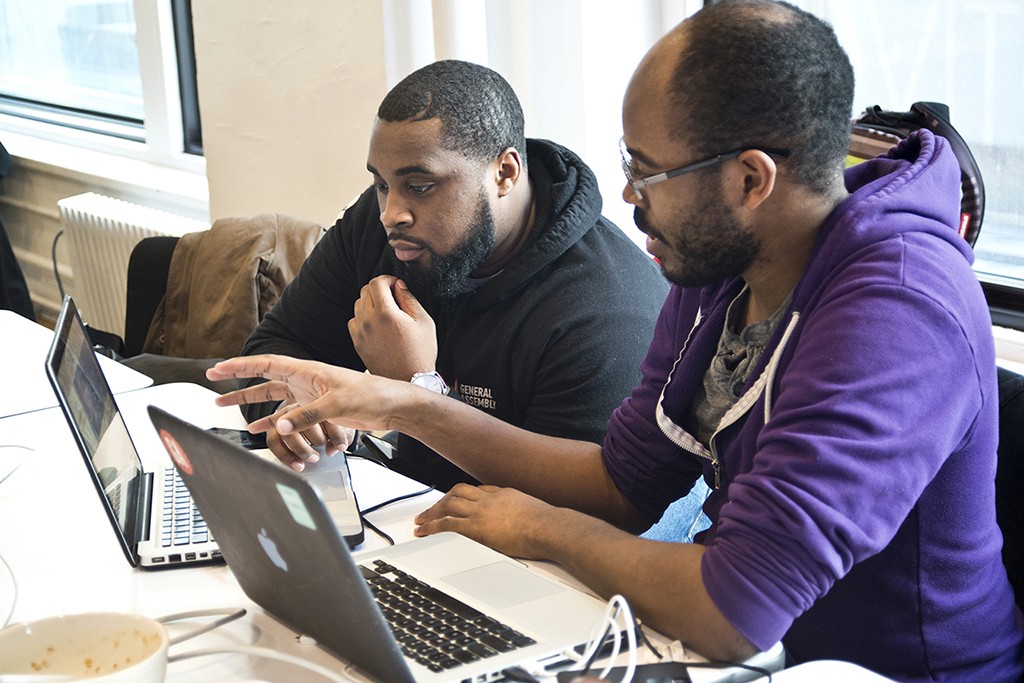
I've run discovery across curriculum redesigns, enterprise learning programs, and team structure overhauls. The posture is the same every time. I don't walk in with a hypothesis I'm trying to confirm. I walk in with questions I haven't been able to answer yet. The discipline of not-concluding is one of the most active things I do. Everything that follows depends on getting this phase right.
Team Practice
Distributed sensing
I've never done discovery as a solo act. When I rebuilt GA's curriculum model, the signal came from twelve instructors running live experiments simultaneously, each one sensing different edges, bringing back different data. My job was to build the container that held those signals without collapsing them prematurely. The productive state isn't resolution. It's multiple truths, held in tension, long enough to generate real insight.

Discovery
Sensing
Field Posture
The naturalist's stance
I've run discovery across curriculum redesigns, enterprise learning programs, and team structure overhauls. The posture is the same every time. I don't walk in with a hypothesis I'm trying to confirm. I walk in with questions I haven't been able to answer yet. The discipline of not-concluding is one of the most active things I do. Everything that follows depends on getting this phase right.
Team Practice
Distributed sensing
I've never done discovery as a solo act. When I rebuilt GA's curriculum model, the signal came from twelve instructors running live experiments simultaneously, each one sensing different edges, bringing back different data. My job was to build the container that held those signals without collapsing them prematurely. The productive state isn't resolution. It's multiple truths, held in tension, long enough to generate real insight.
Discovery
Sensing
Field Posture
The naturalist's stance
I've run discovery across curriculum redesigns, enterprise learning programs, and team structure overhauls. The posture is the same every time. I don't walk in with a hypothesis I'm trying to confirm. I walk in with questions I haven't been able to answer yet. The discipline of not-concluding is one of the most active things I do. Everything that follows depends on getting this phase right.
Team Practice
Distributed sensing
I've never done discovery as a solo act. When I rebuilt GA's curriculum model, the signal came from twelve instructors running live experiments simultaneously, each one sensing different edges, bringing back different data. My job was to build the container that held those signals without collapsing them prematurely. The productive state isn't resolution. It's multiple truths, held in tension, long enough to generate real insight.
Discovery
Divergence
Encapsulate · Synthesis
Synthesis as compression
Synthesis as compression
Focused synthesis transforms abstract data into clear insight and a validated problem space
Good synthesis isn't summary. It's reduction to signal. I compress what's been gathered into something the team can act on: a validated problem space, a shared language, a frame that makes the invisible legible.
This is where divergence earns its closure. When I rebuilt the AI-fluency curriculum at GA, the synthesis phase wasn't about capturing what we learned. It was about finding the frame that changed what we were willing to build.
Encapsulation produces artifacts: insight maps, HMW reframes, validated job stories, tension matrices. But more importantly, it produces alignment. A team that agrees not just on the answer, but on the shape of the question.
Good synthesis isn't summary. It's reduction to signal. I compress what's been gathered into something the team can act on: a validated problem space, a shared language, a frame that makes the invisible legible.
This is where divergence earns its closure. When I rebuilt the AI-fluency curriculum at GA, the synthesis phase wasn't about capturing what we learned. It was about finding the frame that changed what we were willing to build.
Encapsulation produces artifacts: insight maps, HMW reframes, validated job stories, tension matrices. But more importantly, it produces alignment. A team that agrees not just on the answer, but on the shape of the question.
Encapsulate Approach
This is how complexity becomes reality…
…not by flattening what was gathered, but by finding the frame that makes it actionable. Along the way, I hold these synthesis principles true.

The art of the frame
How I name a problem determines what solutions become visible. I invest heavily in reframing until the problem statement opens rather than forecloses.
From data to decision
Synthesis is a design act. What I foreground, what I hold back, what I name — those choices shape everything the team does next. I take that responsibility seriously.

Shared language
One of the most underrated outcomes of synthesis is vocabulary. A team that agrees on what to call things moves faster. I build toward that alignment deliberately.

Validating the space
Encapsulation isn't just compression. It's confirmation. Before moving forward, I pressure-test the problem definition against the evidence gathered. That discomfort is a signal of integrity, not failure.
Encapsulate Approach
This is how complexity becomes reality…
…not by flattening what was gathered, but by finding the frame that makes it actionable. Along the way, I hold these synthesis principles true.
The art of the frame
How I name a problem determines what solutions become visible. I invest heavily in reframing until the problem statement opens rather than forecloses.
From data to decision
Synthesis is a design act. What I foreground, what I hold back, what I name — those choices shape everything the team does next. I take that responsibility seriously.
Shared language
One of the most underrated outcomes of synthesis is vocabulary. A team that agrees on what to call things moves faster. I build toward that alignment deliberately.
Validating the space
Encapsulation isn't just compression. It's confirmation. Before moving forward, I pressure-test the problem definition against the evidence gathered. That discomfort is a signal of integrity, not failure.
Encapsulate Approach
This is how complexity becomes reality…
…not by flattening what was gathered, but by finding the frame that makes it actionable. Along the way, I hold these synthesis principles true.
The art of the frame
How I name a problem determines what solutions become visible. I invest heavily in reframing until the problem statement opens rather than forecloses.
From data to decision
Synthesis is a design act. What I foreground, what I hold back, what I name — those choices shape everything the team does next. I take that responsibility seriously.
Shared language
One of the most underrated outcomes of synthesis is vocabulary. A team that agrees on what to call things moves faster. I build toward that alignment deliberately.
Validating the space
Encapsulation isn't just compression. It's confirmation. Before moving forward, I pressure-test the problem definition against the evidence gathered. That discomfort is a signal of integrity, not failure.

Synthesis
Synthesis Posture
Compression is not simplification
The trap of synthesis is the illusion of clarity. I've seen it happen: a clean framework that feels resolved but has quietly lost the nuance that makes the problem real. I hold the messy version alongside the clean one. Good synthesis should make the team feel like they finally understand, and also a little afraid of what they're taking on.
Team Outcome
Alignment as artifact
The most durable output of a synthesis phase isn't a slide deck. It's a room full of people who agree on what they're solving and why it matters. I treat that alignment as the actual deliverable. When the team leaves the room, they should feel less like they received a presentation and more like they built something together.

Compression
Synthesis
Synthesis Posture
Compression is not simplification
The trap of synthesis is the illusion of clarity. I've seen it happen: a clean framework that feels resolved but has quietly lost the nuance that makes the problem real. I hold the messy version alongside the clean one. Good synthesis should make the team feel like they finally understand, and also a little afraid of what they're taking on.
Team Outcome
Alignment as artifact
The most durable output of a synthesis phase isn't a slide deck. It's a room full of people who agree on what they're solving and why it matters. I treat that alignment as the actual deliverable. When the team leaves the room, they should feel less like they received a presentation and more like they built something together.
Compression
Synthesis
Synthesis Posture
Compression is not simplification
The trap of synthesis is the illusion of clarity. I've seen it happen: a clean framework that feels resolved but has quietly lost the nuance that makes the problem real. I hold the messy version alongside the clean one. Good synthesis should make the team feel like they finally understand, and also a little afraid of what they're taking on.
Team Outcome
Alignment as artifact
The most durable output of a synthesis phase isn't a slide deck. It's a room full of people who agree on what they're solving and why it matters. I treat that alignment as the actual deliverable. When the team leaves the room, they should feel less like they received a presentation and more like they built something together.
Compression

Frameworks
Enlighten · Framing
Research as propulsion
Research as propulsion
Research becomes propulsion, shaping structure and illuminating design potential
Research doesn't end. It transforms. What began as questions becomes the architecture of what's possible. This phase is about converting gathered intelligence into a design posture: frameworks, principles, and criteria that give the team shared orientation.
Clarity is a condition, not a deliverable. When I rebuilt GA's AI-fluency curriculum, the enlighten phase wasn't a presentation. It was a set of six tenets that changed how every instructor approached their unit. That shared orientation is what makes a team move faster and with less internal friction.
This is where I build the scaffolding: structured design briefs, principle sets, constraint maps, and the creative provocations that push teams past their first instinct toward their second, better one.
Research doesn't end. It transforms. What began as questions becomes the architecture of what's possible. This phase is about converting gathered intelligence into a design posture: frameworks, principles, and criteria that give the team shared orientation.
Clarity is a condition, not a deliverable. When I rebuilt GA's AI-fluency curriculum, the enlighten phase wasn't a presentation. It was a set of six tenets that changed how every instructor approached their unit. That shared orientation is what makes a team move faster and with less internal friction.
This is where I build the scaffolding: structured design briefs, principle sets, constraint maps, and the creative provocations that push teams past their first instinct toward their second, better one.
Enlighten Approach
This is how insight becomes direction…
…not through a presentation, but through shared scaffolding the whole team can build on. Along the way, I hold these principles of practice true.

Principles over rules
Constraints that explain their own reasoning are more powerful than mandates. I build principles that teach teams how to think, not just what to do.

The brief as instrument
A design brief isn't a scope document. It's a generative tool. Written well, it focuses energy without foreclosing creative imagination.

Creative provocation
The first idea is rarely the best one. I build provocations into the enlightenment phase that deliberately unsettle comfortable assumptions and push teams forward.

Collective intelligence
Intelligence scales when it's distributed. I design for the whole team to develop insight together, not receive it from the front of the room.
Enlighten Approach
This is how insight becomes direction…
…not through a presentation, but through shared scaffolding the whole team can build on. Along the way, I hold these principles of practice true.
Principles over rules
Constraints that explain their own reasoning are more powerful than mandates. I build principles that teach teams how to think, not just what to do.
The brief as instrument
A design brief isn't a scope document. It's a generative tool. Written well, it focuses energy without foreclosing creative imagination.
Creative provocation
The first idea is rarely the best one. I build provocations into the enlightenment phase that deliberately unsettle comfortable assumptions and push teams forward.
Collective intelligence
Intelligence scales when it's distributed. I design for the whole team to develop insight together, not receive it from the front of the room.
Enlighten Approach
This is how insight becomes direction…
…not through a presentation, but through shared scaffolding the whole team can build on. Along the way, I hold these principles of practice true.
Principles over rules
Constraints that explain their own reasoning are more powerful than mandates. I build principles that teach teams how to think, not just what to do.
The brief as instrument
A design brief isn't a scope document. It's a generative tool. Written well, it focuses energy without foreclosing creative imagination.
Creative provocation
The first idea is rarely the best one. I build provocations into the enlightenment phase that deliberately unsettle comfortable assumptions and push teams forward.
Collective intelligence
Intelligence scales when it's distributed. I design for the whole team to develop insight together, not receive it from the front of the room.

Propulsion
Structural Thinking
The scaffolding metaphor
Scaffolding exists to be removed. The frameworks and principles I build in this phase aren't permanent structures. They're temporary support that enables the team to build something that will stand on its own. I measure the success of enlightenment by how confidently the team moves without me. When they start challenging their own assumptions before I ask them to, the scaffolding has done its job.
Leadership Approach
Direction without prescription
The hardest thing about this phase is calibrating how much structure to provide. Too little, and the team disperses into incoherence. Too much, and I've killed the creative energy that makes the next phase generative. I've learned to hold direction loosely, pointing clearly at the destination while leaving the path genuinely open. That tension between focus and freedom is where the best design work lives.

Scaffolding
Propulsion
Structural Thinking
The scaffolding metaphor
Scaffolding exists to be removed. The frameworks and principles I build in this phase aren't permanent structures. They're temporary support that enables the team to build something that will stand on its own. I measure the success of enlightenment by how confidently the team moves without me. When they start challenging their own assumptions before I ask them to, the scaffolding has done its job.
Leadership Approach
Direction without prescription
The hardest thing about this phase is calibrating how much structure to provide. Too little, and the team disperses into incoherence. Too much, and I've killed the creative energy that makes the next phase generative. I've learned to hold direction loosely, pointing clearly at the destination while leaving the path genuinely open. That tension between focus and freedom is where the best design work lives.
Scaffolding
Propulsion
Structural Thinking
The scaffolding metaphor
Scaffolding exists to be removed. The frameworks and principles I build in this phase aren't permanent structures. They're temporary support that enables the team to build something that will stand on its own. I measure the success of enlightenment by how confidently the team moves without me. When they start challenging their own assumptions before I ask them to, the scaffolding has done its job.
Leadership Approach
Direction without prescription
The hardest thing about this phase is calibrating how much structure to provide. Too little, and the team disperses into incoherence. Too much, and I've killed the creative energy that makes the next phase generative. I've learned to hold direction loosely, pointing clearly at the destination while leaving the path genuinely open. That tension between focus and freedom is where the best design work lives.
Scaffolding
Ideation
Envisage · Ideation
Letting ideas branch freely
Letting ideas branch freely
Insight-fueled ideation expands possibilities before converging on a focused solution
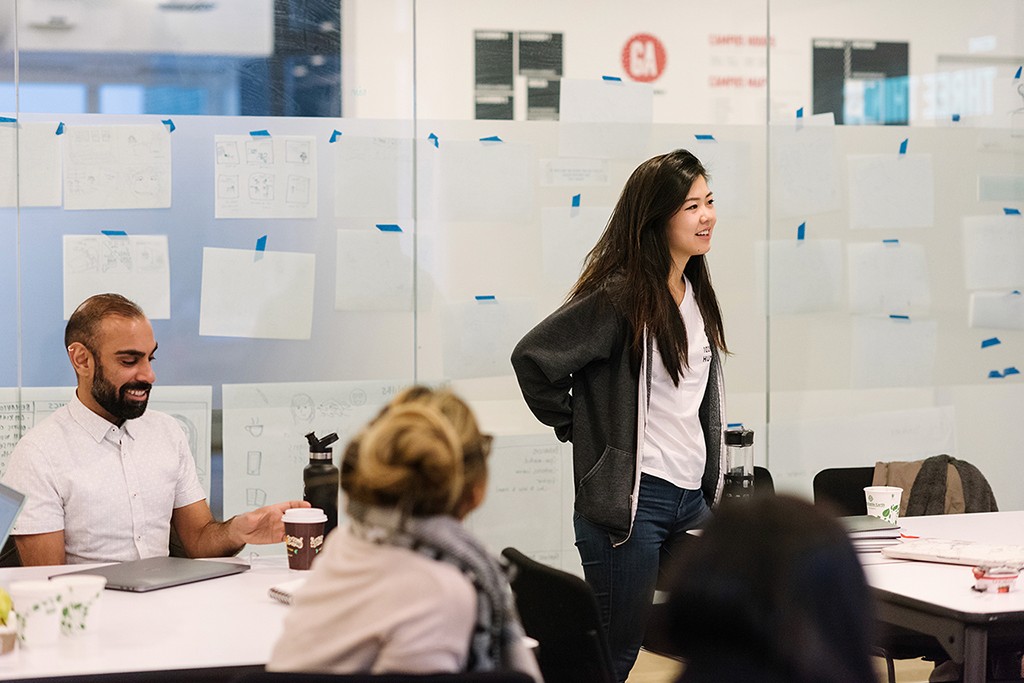
A canopy doesn't grow by choosing one branch early. It expands in every direction, testing the available light, before energy concentrates in the paths that hold. I run ideation the same way, holding the space open long enough for genuinely different solutions to emerge.
The discipline here isn't narrowing faster. It's knowing when narrowing is earned. The best ideas need time to become legible. They arrive late, look strange at first, and require a room that won't flinch at them.
Envisage is where I work hardest as a facilitator, creating the conditions for imagination, keeping energy moving, and ensuring the eventual convergence is led by the work and not by whoever speaks loudest.
A canopy doesn't grow by choosing one branch early. It expands in every direction, testing the available light, before energy concentrates in the paths that hold. I run ideation the same way, holding the space open long enough for genuinely different solutions to emerge.
The discipline here isn't narrowing faster. It's knowing when narrowing is earned. The best ideas need time to become legible. They arrive late, look strange at first, and require a room that won't flinch at them.
Envisage is where I work hardest as a facilitator, creating the conditions for imagination, keeping energy moving, and ensuring the eventual convergence is led by the work and not by whoever speaks loudest.
Envisage Approach
This is how possibility stays open long enough…
…to let the best ideas arrive late, look strange, and earn their place. Along the way, I hold these creative principles true.

Quantity before quality
The first round of ideas is clearing the obvious. I push teams past the predictable into the territory where something genuinely new might live.

Protecting the strange
The idea that sounds wrong in the room is often the one that becomes right. I build facilitation environments where divergent thinking has genuine safety.

Convergence by criteria
When the space closes, it closes around the work, filtered by the principles established in the enlighten phase, not by seniority or volume.

The focused solution
A focused solution is more powerful than a comprehensive one. I help teams find the essential version of their best idea and commit to it fully.
Envisage Approach
This is how possibility stays open long enough…
…to let the best ideas arrive late, look strange, and earn their place. Along the way, I hold these creative principles true.
Quantity before quality
The first round of ideas is clearing the obvious. I push teams past the predictable into the territory where something genuinely new might live.
Protecting the strange
The idea that sounds wrong in the room is often the one that becomes right. I build facilitation environments where divergent thinking has genuine safety.
Convergence by criteria
When the space closes, it closes around the work, filtered by the principles established in the enlighten phase, not by seniority or volume.
The focused solution
A focused solution is more powerful than a comprehensive one. I help teams find the essential version of their best idea and commit to it fully.
Envisage Approach
This is how possibility stays open long enough…
…to let the best ideas arrive late, look strange, and earn their place. Along the way, I hold these creative principles true.
Quantity before quality
The first round of ideas is clearing the obvious. I push teams past the predictable into the territory where something genuinely new might live.
Protecting the strange
The idea that sounds wrong in the room is often the one that becomes right. I build facilitation environments where divergent thinking has genuine safety.
Convergence by criteria
When the space closes, it closes around the work, filtered by the principles established in the enlighten phase, not by seniority or volume.
The focused solution
A focused solution is more powerful than a comprehensive one. I help teams find the essential version of their best idea and commit to it fully.

Expansion
Creative Leadership
The generative middle
There's a specific feeling in a great ideation session, a kind of productive chaos where the room doesn't quite know where it's going but trusts the process enough to keep moving. Getting a team to that place, and holding it there long enough to be useful, is one of the hardest things in design leadership. It requires a level of facilitative confidence that only comes from having seen what's possible on the other side of it.
Convergence Craft
When to close the space
Knowing when to stop generating and start deciding is a judgment call that most teams make too early. I've developed a set of felt senses for when a space is truly exhausted versus when it just feels uncomfortable. The timing of convergence is as important as its method, and getting it wrong in either direction costs more than most teams realize.

Convergence
Expansion
Creative Leadership
The generative middle
There's a specific feeling in a great ideation session, a kind of productive chaos where the room doesn't quite know where it's going but trusts the process enough to keep moving. Getting a team to that place, and holding it there long enough to be useful, is one of the hardest things in design leadership. It requires a level of facilitative confidence that only comes from having seen what's possible on the other side of it.
Convergence Craft
When to close the space
Knowing when to stop generating and start deciding is a judgment call that most teams make too early. I've developed a set of felt senses for when a space is truly exhausted versus when it just feels uncomfortable. The timing of convergence is as important as its method, and getting it wrong in either direction costs more than most teams realize.
Convergence
Expansion
Creative Leadership
The generative middle
There's a specific feeling in a great ideation session, a kind of productive chaos where the room doesn't quite know where it's going but trusts the process enough to keep moving. Getting a team to that place, and holding it there long enough to be useful, is one of the hardest things in design leadership. It requires a level of facilitative confidence that only comes from having seen what's possible on the other side of it.
Convergence Craft
When to close the space
Knowing when to stop generating and start deciding is a judgment call that most teams make too early. I've developed a set of felt senses for when a space is truly exhausted versus when it just feels uncomfortable. The timing of convergence is as important as its method, and getting it wrong in either direction costs more than most teams realize.
Convergence

Collaboration
Collaboration
Collaboration
Execute · Delivery
Precision through collaboration
Precision through collaboration
Effective collaboration sparks precision and continuous design iteration and evolution
Execution is not the end of thinking. It's where thinking becomes tangible. I work in close collaboration with builders, researchers, and stakeholders, treating iteration not as correction but as continuous refinement toward a clearer signal.
The best outcomes I've shipped came from teams that trusted each other enough to evolve the work together, moving fast without losing fidelity. GA's cross-functional product program is the clearest proof of that: designers and engineers, same brief, same constraints, iterating in real time.
Execute is where the practice closes the loop. Every iteration produces new information. Every shipped decision changes the system. The ecology of the work is never static, and the best design teams know how to read those changes and respond with intelligence.
Execution is not the end of thinking. It's where thinking becomes tangible. I work in close collaboration with builders, researchers, and stakeholders, treating iteration not as correction but as continuous refinement toward a clearer signal.
The best outcomes I've shipped came from teams that trusted each other enough to evolve the work together, moving fast without losing fidelity. GA's cross-functional product program is the clearest proof of that: designers and engineers, same brief, same constraints, iterating in real time.
Execute is where the practice closes the loop. Every iteration produces new information. Every shipped decision changes the system. The ecology of the work is never static, and the best design teams know how to read those changes and respond with intelligence.
Execute Approach
This is how thinking becomes tangible…
…through close collaboration, honest iteration, and the discipline to keep craft and momentum moving at the same time. Along the way, I hold these ways of shipping true.

Iteration as intelligence
Each cycle of making and testing isn't just refinement. It's learning. I build teams that extract maximum intelligence from every round of feedback.

Craft as care
Craft isn't perfectionism. It's the visible evidence of caring about the person on the other end. I hold the quality bar through the pressure of timelines.

Design and build as one
The handoff model is broken. The best execution happens when designers and builders are in constant contact, co-evolving the solution in real time.
Closing the loop
Execution that doesn't feed back into understanding is just production. I build evaluation into the rhythm of the work so the system learns as it ships.
Execute Approach
This is how thinking becomes tangible…
…through close collaboration, honest iteration, and the discipline to keep craft and momentum moving at the same time. Along the way, I hold these ways of shipping true.
Iteration as intelligence
Each cycle of making and testing isn't just refinement. It's learning. I build teams that extract maximum intelligence from every round of feedback.
Craft as care
Craft isn't perfectionism. It's the visible evidence of caring about the person on the other end. I hold the quality bar through the pressure of timelines.
Design and build as one
The handoff model is broken. The best execution happens when designers and builders are in constant contact, co-evolving the solution in real time.
Closing the loop
Execution that doesn't feed back into understanding is just production. I build evaluation into the rhythm of the work so the system learns as it ships.
Execute Approach
This is how thinking becomes tangible…
…through close collaboration, honest iteration, and the discipline to keep craft and momentum moving at the same time. Along the way, I hold these ways of shipping true.
Iteration as intelligence
Each cycle of making and testing isn't just refinement. It's learning. I build teams that extract maximum intelligence from every round of feedback.
Craft as care
Craft isn't perfectionism. It's the visible evidence of caring about the person on the other end. I hold the quality bar through the pressure of timelines.
Design and build as one
The handoff model is broken. The best execution happens when designers and builders are in constant contact, co-evolving the solution in real time.
Closing the loop
Execution that doesn't feed back into understanding is just production. I build evaluation into the rhythm of the work so the system learns as it ships.

Systems
Systems Perspective
The ecology of shipping
Every product that ships changes the environment it enters. Users adapt, expectations shift, the competition responds, the team learns. I think about execution as an ecological act, not just making something and releasing it, but participating in a living system that will be different because you entered it. That perspective changes how I think about quality, timing, and what it means to be done.
Future-forward Thinking
What outlasts the project
The most durable thing I've shipped isn't a product. It's a way of working. Teams that learn to move through emergence, synthesis, enlightenment, ideation, and execution with fluency carry that capacity into everything they build next. The practice is the asset. The curriculum, the framework, the team structure: these are the things that compound. I measure success by how much better the team gets at doing this without me.

Execution
Systems
Systems Perspective
The ecology of shipping
Every product that ships changes the environment it enters. Users adapt, expectations shift, the competition responds, the team learns. I think about execution as an ecological act, not just making something and releasing it, but participating in a living system that will be different because you entered it. That perspective changes how I think about quality, timing, and what it means to be done.
Future-forward Thinking
What outlasts the project
The most durable thing I've shipped isn't a product. It's a way of working. Teams that learn to move through emergence, synthesis, enlightenment, ideation, and execution with fluency carry that capacity into everything they build next. The practice is the asset. The curriculum, the framework, the team structure: these are the things that compound. I measure success by how much better the team gets at doing this without me.
Execution
Systems
Systems Perspective
The ecology of shipping
Every product that ships changes the environment it enters. Users adapt, expectations shift, the competition responds, the team learns. I think about execution as an ecological act, not just making something and releasing it, but participating in a living system that will be different because you entered it. That perspective changes how I think about quality, timing, and what it means to be done.
Future-forward Thinking
What outlasts the project
The most durable thing I've shipped isn't a product. It's a way of working. Teams that learn to move through emergence, synthesis, enlightenment, ideation, and execution with fluency carry that capacity into everything they build next. The practice is the asset. The curriculum, the framework, the team structure: these are the things that compound. I measure success by how much better the team gets at doing this without me.
Execution
I'm always open to meaningful conversations
I’m here for it. Whether you have a question, an idea, or just want to connect, reach out and let’s build a conversation.







I'm always open to meaningful conversations
I’m here for it. Whether you have a question, an idea, or just want to connect, reach out and let’s build a conversation.
I'm always open to meaningful conversations
I’m here for it. Whether you have a question, an idea, or just want to connect, reach out and let’s build a conversation.